
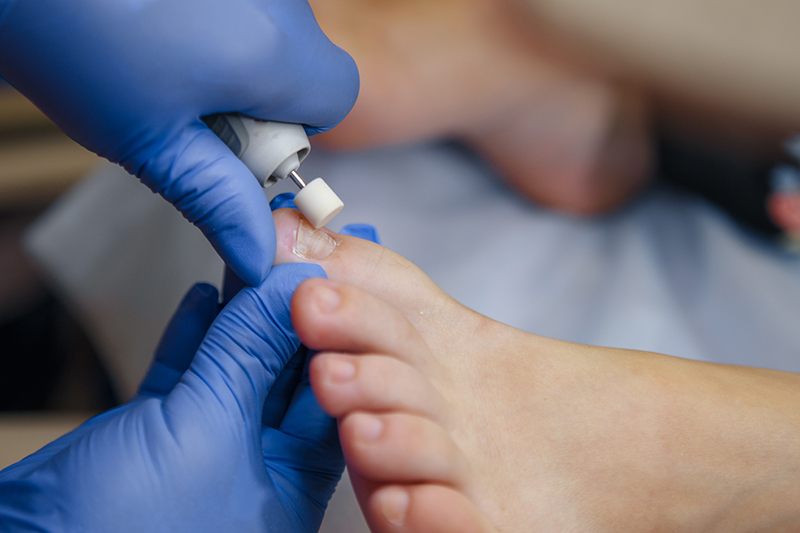
It might not sound glamorous, but grinding thickened toenails is one of the most satisfying treatments we provide. Thickening of toenails is a common foot problem particularly amongst the elderly, but fortunately one that can be managed effectively.
Also known as nail debridement or nail reduction, this treatment uses a specialised podiatry drill (burr) to safely thin the nails—whether the thickening is as a result of a fungal infection, trauma, disease or other causes, the procedure is generally painless and offers many benefits.
Benefits of toenail grinding
Reduces pain and pressure:
Thick toenails can press against shoes and the nail bed, causing discomfort. Grinding thins the nail, making walking and wearing shoes more comfortable.
Improves mobility:
If thick nails make walking painful, reducing their thickness can help you move more comfortably.
Lowers the risk of injury:
Thick or brittle nails are more likely to catch on socks or bedding and tear. Smoothing them reduces this risk.
Helps prevent ingrown toenails:
Carefully reducing and reshaping the nail may decrease pressure at the edges, helping to lower the risk of ingrown nails.
May improve topical treatment for fungal nails:
If a nail is thickened by a fungal infection, grinding can reduce the amount of infected nail and may help antifungal medications penetrate more effectively. It is not, however, a cure on its own.
Safe care for people with medical conditions:
People with diabetes, poor circulation, neuropathy, or difficulty reaching their feet often benefit from podiatric care, as it reduces the risk of cuts and infection that can occur with self-treatment.
Improves the appearance of the nail:
While the primary goal is comfort and health, thinning and smoothing thickened nails also helps them look neater and more natural.
How often would thickened toenails need to be reduced?
Depending on how quickly your nails grow and the underlying cause of the thickening, you may need repeat treatment every 6–12 weeks.